Golf Ball Numbers Explained: What Does the Number Mean?
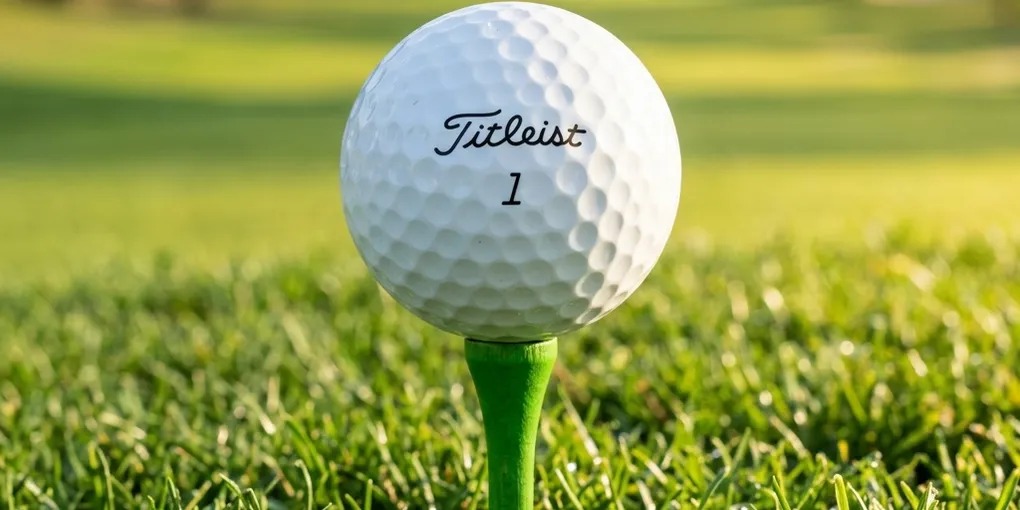
If you open a brand new box of golf balls, you will notice that every single ball has a prominent, single-digit number printed on it—usually a 1, 2, 3, or 4.
As a beginner, you might wonder if this number represents the quality of the ball, the weight, or perhaps the compression rating. The truth is actually much simpler!
Here are the answers to the most common questions beginners have about golf ball numbers.
Q: What do the single-digit numbers (1, 2, 3, 4) mean?
A: They are strictly for identification.
The single-digit number has absolutely nothing to do with how the ball performs. A Callaway ball with a “1” on it flies exactly the same as a Callaway ball with a “4” on it.
When you buy a dozen golf balls, they usually come packaged in four “sleeves.” Each sleeve contains three balls. To make things easy, the manufacturer prints a “1” on the balls in the first sleeve, a “2” on the second sleeve, a “3” on the third, and a “4” on the fourth.
Q: Why is identification so important in golf?
A: Because playing the wrong ball comes with a massive penalty!
Imagine you and your friend are both using a Titleist TruFeel golf ball (a great choice we recommend in our Beginner Golf Ball Buying Guide). You both hit your balls into the right side of the fairway.
When you walk up to the grass, how do you know which ball is yours?
If you accidentally hit your friend’s golf ball, the official Rules of Golf will slap you with a crushing Two-Stroke Penalty. The easiest way to avoid this disaster is to check the number before you swing! If you know you teed off with a “Titleist 3,” and the ball in the grass is a “Titleist 1,” you know it is not your ball!
Q: What should I do if my friend and I are playing the exact same number?
A: You need to “Mark” your golf ball with a Sharpie.
It is very common for two players in the same group to accidentally tee up a “Callaway 2.” If this happens, the printed number is no longer enough to identify your ball.
To solve this, almost all experienced golfers carry a permanent marker (like a Sharpie) in their bag. Before you tee off, draw a unique symbol on your golf ball. You can draw a single dot, a line, your initials, or even a smiley face. As long as the mark is unique to you, you will never accidentally hit someone else’s ball!
Q: What do double-digit numbers mean (e.g., 33, 77, 99)?
A: They are just personalized identification numbers or compression ratings.
Sometimes, you will find a golf ball in the woods with a double-digit number on it. Some manufacturers (like Titleist) allow players to custom-order their golf balls with their lucky number printed on them (like 77 or 99).
Other times, a two-digit number (like a 50 or 70) represents the ball’s compression rating (how soft the ball is). Regardless, you use these double-digit numbers the exact same way: to identify your ball and avoid penalty strokes!
TIP
Always check your golf ball’s brand, model, and number before you tee off on the first hole. If you accidentally hit your ball into the woods, knowing exactly what ball you are looking for will make it much easier to find (or properly abandon). If you do lose it, brush up on our Lost Golf Ball Rules so you know exactly how to score it!