The Ultimate Golf Ball Buying Guide for Beginners: Don't Waste Your Money
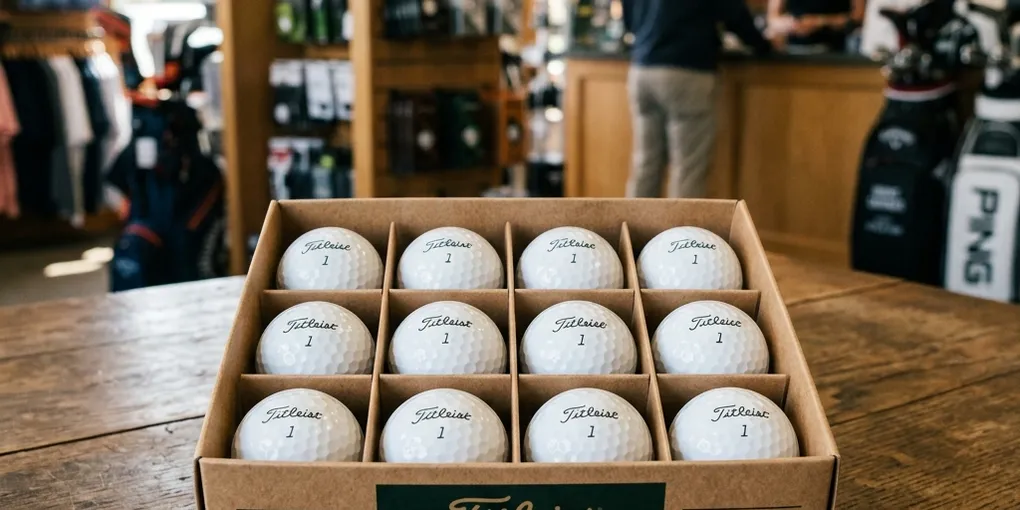
When you walk into a pro shop or browse online for golf balls, the sheer variety can be overwhelming. Some boxes cost $15, while others cost nearly $60. Dozens of technical buzzwords are plastered across the packaging: compression, urethane covers, 4-piece construction, spin control.
As a beginner, what does any of this mean, and which box should you actually buy?
Here is the secret the golf industry doesn’t want you to know: The most expensive golf balls on the shelf will actually make you play worse.
As a beginner, you are going to lose a lot of golf balls in the woods and water. But beyond saving money, you need a ball that is specifically engineered to help fix your mistakes. Here is your ultimate beginner buying guide.
The 3 Things Beginners Need in a Golf Ball
When looking at the back of a golf ball box, here are the three specifications you want to look for.
1. Construction: “2-Piece”
Golf balls are constructed with different layers (pieces). Professional balls are made of 3, 4, or even 5 pieces to give advanced players total control over spin.
As a beginner, you want a 2-piece golf ball. A 2-piece ball consists simply of a large, solid rubber core and an outer cover. This simple construction is designed to do exactly two things: fly very far, and fly very straight. It naturally reduces side-spin, which means your slices and hooks won’t be nearly as severe.
2. The Cover: “Ionomer” or “Surlyn”
The outer shell of a golf ball is usually made of either Urethane or Ionomer (often trademarked as Surlyn).
- Urethane is incredibly soft and grips the clubface. This allows pros to hit crazy spinning shots that stop immediately on the green. However, it also means any bad swing will spin wildly out of bounds. (If you want to know more about why beginners should avoid professional balls, check out our guide on the Pro V1 Myth).
- Ionomer/Surlyn is a harder, incredibly durable plastic material. It resists scuffing when you accidentally hit a cart path, and it generates very low spin. Less spin equals straighter shots. You want a box that advertises an Ionomer or Surlyn cover!
3. Compression Rating: “Low Compression”
Compression is a measure of how easily the core of the golf ball squishes when you hit it. To get maximum distance, a golf ball must compress. However, beginners typically have slower swing speeds than professional athletes. If you hit a high-compression (hard) golf ball, it will feel like hitting a rock, and it won’t travel very far.
You want a low-compression golf ball (usually a rating between 50 and 70). The box will often advertise this as a “soft feel.” Because it is easier to compress, you will get significantly more distance out of your current swing speed without having to swing harder!
Our Top Recommendations
You don’t need to overthink it. Look for balls marketed as “Distance” or “Soft” balls. They usually cost around $15 to $25 per dozen.
Here are some fantastic, beginner-friendly options to keep stocked in your Golf Bag Essentials:
- Callaway Supersoft: Incredibly low compression, flies straight, and feels buttery soft when you hit it.
- Srixon Soft Feel: A classic 2-piece ionomer ball that is durable and very forgiving.
- Titleist TruFeel: The softest and most forgiving ball in the Titleist lineup.
Remember, as a beginner, your main goal is to keep the ball in play. Buy cheap, low-spin, 2-piece golf balls. Your wallet (and your scorecard) will thank you!