Why Do Women Golfers Need Softer, Low-Compression Golf Balls?
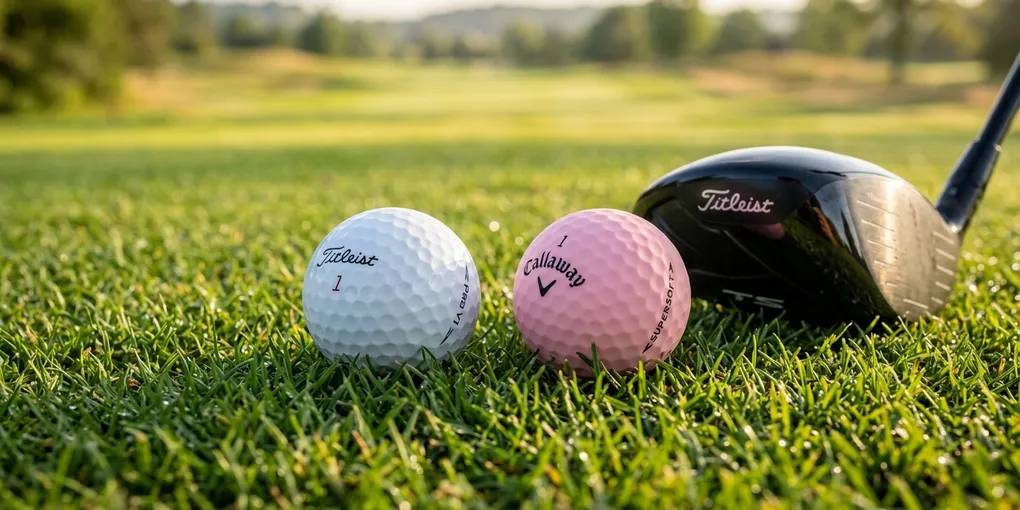
A few weeks ago at the driving range, our 12-year-old daughter found a pristine Titleist Pro V1 sitting near our practice bay. Knowing it was the expensive ball the pros play on television, she teed it up with her driver and swung as hard as she could.
Instead of a high, soaring drive, the ball made a dull, heavy thud, flew low, and dropped out of the sky nearly 20 yards shorter than her usual drives. She shook her hands and rubbed her fingers: “Ouch! That felt like hitting a rock. Why did that expensive ball hurt my hands?”
When she switched back to her soft pink Callaway Supersoft, her next drive launched high into the air with a crisp sound, sailing down the center of the range.
Here is the direct answer: Women golfers and players with moderate swing speeds (under 75 mph) need low-compression golf balls (rated 35 to 60) because their clubhead speed cannot deform firm tour balls (rated 90+). A soft core fully compresses at lower impact speeds, acting like a trampoline that transfers maximum kinetic energy for higher launch and 10 to 20 yards more distance.
Here is the simple physics behind golf ball compression, why firm tour balls rob beginners of distance, and how to choose the right ball for your swing.
What Is “Golf Ball Compression”? (The 0 to 100+ Scale)
Golf ball compression measures how much a ball flattens against the clubface at the moment of impact.
In a laboratory test, a machine applies 200 pounds of weight to the ball core:
- High-Compression Balls (85 to 105+): e.g., Titleist Pro V1, TaylorMade TP5. These balls are engineered for players who swing their driver at 100+ mph (PGA Tour pros and low-handicap golfers).
- Low-Compression Balls (35 to 60): e.g., Callaway Supersoft, Srixon Soft Feel Lady, TaylorMade Soft Response. These balls are engineered for players who swing between 55 and 80 mph (most beginner women, juniors, and senior golfers).
When struck at a moderate swing speed (around 65 mph), a firm tour ball barely deforms, acting like a solid rock with minimal energy transfer. In contrast, a low-compression soft ball fully pancakes against the clubface, activating its elastic core like a trampoline for maximum launch and carry.
Swing Speed & Compression Matrix
To help you match your swing speed to the right golf ball, here is the quick-reference guide:
| Golfer Profile | Driver Swing Speed | Ideal Compression Rating | Core Impact Reaction | Distance & Hand Feel Outcome |
|---|---|---|---|---|
| Beginner Women & Juniors | Below 70 mph | 35 – 50 (Ultra-Soft) | Full trampoline pancake | High launch, maximum carry, buttery-soft feel |
| Intermediate Women & Seniors | 70 to 85 mph | 50 – 70 (Soft-Mid) | Controlled spring rebound | Balanced distance, straight trajectory |
| Average Male Amateurs | 85 to 95 mph | 70 – 85 (Mid-Firm) | Moderate deformation | Good distance, balanced green-side spin |
| PGA Tour / Fast Swingers | 105+ mph | 90 – 105+ (Firm Tour) | High-speed full compression | Piercing trajectory, high spin for shot-shaping |
The Trampoline Effect: Why Hard Balls Cost Beginners Distance
Think of golf ball compression like jumping on a trampoline versus jumping on a hard wooden floor.
If you weigh 50 pounds and jump on a stiff, heavy-duty industrial trampoline, the springs will barely budge. You will barely bounce at all because you do not have enough mass or speed to activate the springs.
That is exactly what happens when a beginner woman swings at 65 mph against a 100-compression tour ball. The clubhead lacks the kinetic force required to compress the firm rubber core. As a result:
- The Ball Doesn’t Rebound: Energy transfer (Smash Factor) is very low, costing you 10 to 20 yards of carry distance.
- Excessive Vibration: The uncompressed core sends harsh shockwaves up the graphite shaft directly into your wrists and elbows.
When you hit a 38-compression soft ball, however, your 65 mph swing easily flattens the soft polybutadiene core. The core acts like a spring, catapulting the ball off the face with high initial velocity and high launch!
The Hidden Bonus: Less Side-Spin = Straighter Drives
There is another massive advantage that soft balls give to beginner women golfers: they reduce slices and hooks.
Firm tour balls are engineered to generate high spin so professionals can curve the ball around trees and make it “bite” and stop instantly on firm greens. But for a beginner, high spin is your worst enemy—it exaggerates any sideways slice spin, sending your ball deep into the right-hand woods!
Low-compression balls produce naturally lower rotational spin off the tee. If your clubface is slightly open at impact, a soft ball will curve far less in the air, keeping you in the short grass!
Is “Women’s Golf Ball” Just Marketing? (The Truth)
Walk into any golf superstore and you will see boxes labeled “Lady” covered in pink, purple, or pastel flowers. Is there really a difference, or is it just the “pink tax”?
Here is the truth:
- The Color & Name Are Marketing: You do not need to buy a ball that says “Lady” or is colored pink unless you like how it looks.
- The Core Physics Are 100% Real: What actually matters is the low-compression core rating (35 to 55).
FAQ: Golf Ball Compression for Women & Beginners
Can men play with women’s low-compression golf balls?
Yes, absolutely. Golf balls do not know who is hitting them—they only react to clubhead speed. Many senior men, junior players, and golfers with swing speeds under 80 mph play low-compression “women’s” balls like Srixon Soft Feel Lady or white Callaway Supersoft because they maximize distance and provide a softer feel.
What compression golf ball should a beginner woman use?
A beginner woman with a driver swing speed between 55 and 70 mph should play a golf ball with a compression rating between 35 and 50. Popular examples include the Callaway Supersoft (compression 38), Srixon Soft Feel Lady (compression 58), and Wilson Duo Soft (compression 35).
Does cold weather affect golf ball compression?
Yes. Cold temperatures make golf ball rubber cores firmer and denser. In freezing temperatures (below 45°F / 7°C), a ball plays roughly 10 to 15 points higher in compression than normal. Playing a soft, low-compression ball in the winter helps offset this cold-weather stiffness.
The Family Takeaway
Our daughter learned this lesson the hard way at the range: the most expensive ball is not the best ball for your game!
If your swing speed is under 80 mph, do your hands and your scorecard a favor: put away the hard tour balls and game a soft, low-compression ball. You will get a higher launch, straighter drives, and a buttery-soft feel on every strike!
Recommended Reading: Explore More Golf Science
If you enjoyed learning about the physics behind golf gear, explore our other beginner equipment guides:
- The Expensive Golf Ball / Pro V1 Myth for Beginners — Why playing tour balls actually hurts high-handicap golfers.
- Do Golf Balls Go Bad Over Time in Storage? — Shelf life, moisture absorption, and storage tests.
- Why Do Golf Balls Have Dimples? — How tiny craters create aerodynamic lift and double your distance.
- Why Do Golfers Wear Only One Glove? (And Which Hand) — The biomechanics behind grip torque and sensory touch.