Steel vs. Graphite Shafts for Women Beginners: A Q&A Guide
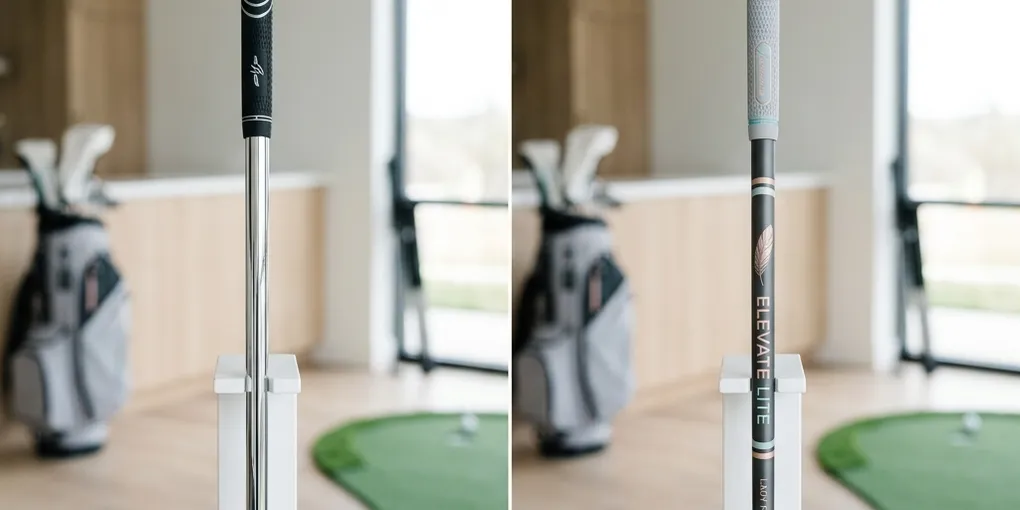
When I first started shopping for my golf clubs, the terminology felt like a completely foreign language. One of the most confusing things the pro shop asked me was: “Do you want steel or graphite shafts?”
If you are a woman entering the sport like I did, the material of your golf shaft plays a massive role in how quickly you learn and how much fun you have on the course.
To help you navigate this without the confusing jargon, I have put together this simple Q&A to break down exactly what you need to know about steel vs. graphite shafts, and what actually worked for our family.
Q: What is the main difference between steel and graphite shafts?
A: The primary difference comes down to weight and flexibility.
Steel shafts are heavier, stiffer, and generally cheaper to manufacture. Because they are heavy, they are designed for players with very fast, aggressive swing speeds who need maximum control over their clubhead.
Graphite shafts, on the other hand, are made of carbon fiber. They are significantly lighter and inherently more flexible. Because they weigh less, it requires less physical strength to swing them, making them much easier to maneuver for the average beginner.
Q: Why are graphite shafts usually recommended for women beginners?
A: Graphite is almost universally recommended for women beginners because of two factors: Swing Speed and Physical Strength.
To hit a golf ball high and far, you need clubhead speed. If a club is too heavy, your swing naturally slows down, resulting in frustrating, low-flying shots. Because graphite is so lightweight, it allows players with less physical strength to generate more speed effortlessly.
A Personal Example from My Family: When my 12-year-old daughter first started golfing, she really struggled with standard clubs because she simply didn’t have the strength yet, and her swing was naturally slower. The moment we switched her to clubs with a “Ladies Flex” graphite shaft, everything changed. The graphite shaft was much lighter and softer, which perfectly accommodated her swing. It worked a lot better for her immediately, and it was a huge “aha!” moment for me regarding the importance of equipment.
This is the perfect illustration of why graphite works. Whether you are a 12-year-old junior golfer or an adult woman picking up a club for the first time, a lighter, softer shaft is the secret to getting the ball in the air.
Q: Do graphite shafts actually help with distance?
A: Yes! The “softness” (or flex) of a graphite shaft acts like a slingshot.
As you swing down toward the golf ball, a flexible graphite shaft will bend slightly. Right at the moment of impact, the shaft snaps back into place, transferring all that stored energy into the golf ball. This “whip” effect helps slower swingers achieve maximum distance without having to muscle the club.
Furthermore, graphite shafts absorb vibration much better than steel. If you hit a bad shot (a “mishit”) with a steel shaft, the harsh vibration travels straight up the club into your hands and arms. Graphite absorbs that shock, making it much more comfortable to practice for longer periods.
Q: Is there any reason a beginner woman should choose steel shafts?
A: In 99% of cases, no.
Unless a woman comes from a highly athletic background (like collegiate softball or tennis) where she already possesses incredible upper body strength and rotational speed, steel shafts will only hold her back. They will feel heavy, tiring, and make learning the golf swing much more difficult.
For almost all women beginners, a set of clubs with a Ladies Flex (L-Flex) Graphite Shaft is the absolute best starting point.
Final Verdict
Don’t make the game harder than it needs to be! By choosing a lightweight, graphite shaft, you are setting yourself up for a much more enjoyable and successful introduction to golf.